Hyper Bloom Color Palettes and Typography Pairings: A Designer's Practical Guide
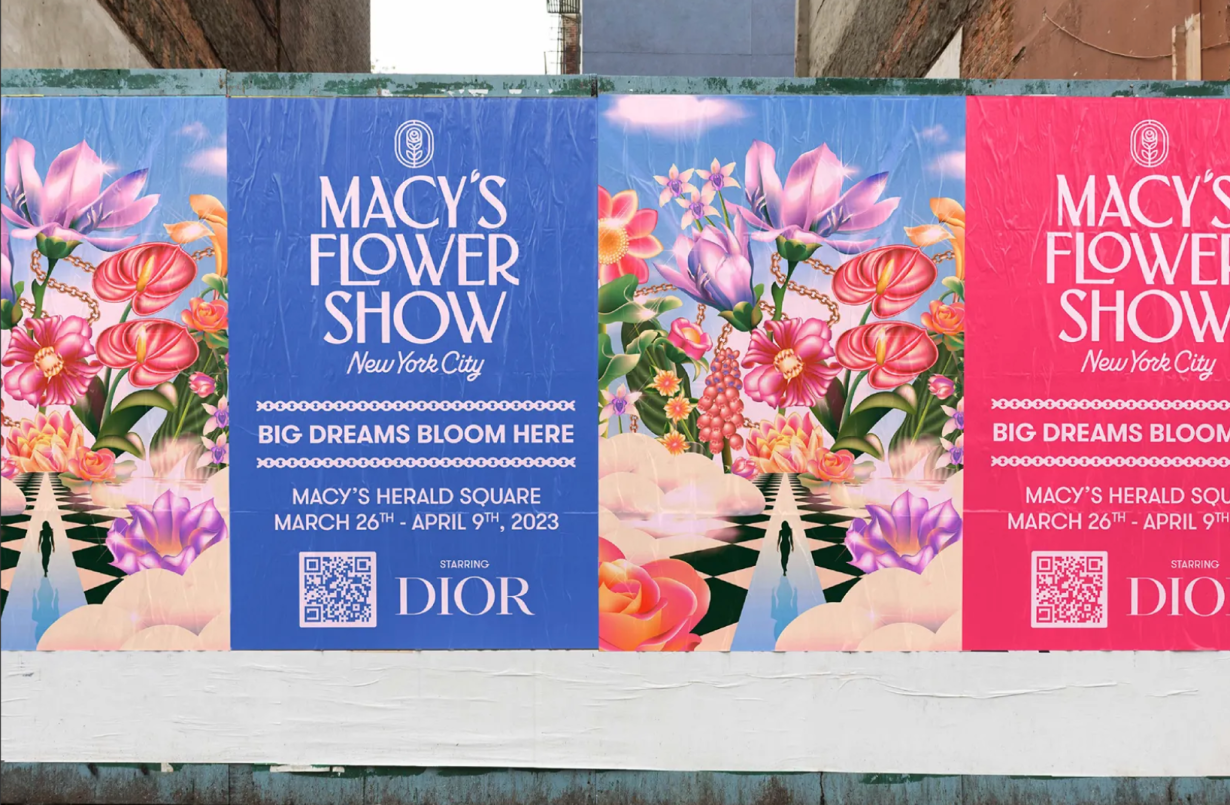
The worst thing that happens with Hyper-Bloom isn't that it looks bad. It's that it looks almost right — the florals are big enough, the blur is soft enough, the composition is centered — but something feels off and you can't name it. Nine times out of ten, the problem isn't the flowers. It's the colors you put around them, or the typeface you set against them, or both.
Hyper-Bloom is an unforgiving aesthetic. Its visual density leaves zero room for palette mistakes. A font that's too delicate disappears into the petals. A color that's one shade too saturated fights the blooms instead of framing them. Get the pairing wrong and the whole composition tips from "intentional maximalism" into "nobody edited this."
The good news: the rules are learnable, and the tools are better than ever. Here's what I use, what I avoid, and the specific pairings I come back to.
Why Color and Type Make or Break It
Hyper-Bloom compositions carry enormous visual weight — oversized florals, atmospheric blur, layered textures, saturated color. Every other design element has to make a binary decision: either compete with that weight at equal intensity, or anchor it by receding. There is no middle ground that works.
Color sets the emotional register before the viewer registers a single flower. A Hyper-Bloom composition on a cream background with muted olive type reads as artisanal and considered. The same composition on neon white with pure black Helvetica reads as a stock photo with a caption. The difference is entirely in the palette choices around the image, not the image itself.
Typography has an even harder job. It has to be legible against a background that is actively working against legibility — gradients, blur, high detail, unpredictable negative space. And it has to feel like it belongs in the same composition as flowers that are trying very hard to be the main character. This isn't a job for a default system font. But it's also not a job for a typeface that tries to compete with the florals on their own terms, unless you know exactly what you're doing.
The framework I use: every element in a Hyper-Bloom composition answers one question — "are you competing or anchoring?" The palette and the type need to know the answer before you place a single pixel.
The Atrevido Palette: Saturated Primaries Done Right
Atrevido — Spanish for "bold" or "daring" — is one of the five named trends in the Florists' Review 2026 forecast, and it's the color camp that most naturally pairs with Hyper-Bloom's maximalist branch. The palette is built on singular, saturated primary colors: crimson, cobalt blue, bold yellow, and orange, used at full intensity rather than muted or pastel. Think Bad Bunny album energy, not watercolor garden.
Here are the working hex values I use:
Color | Hex | Role |
|---|---|---|
Crimson |
| Hero color — use as the dominant saturated anchor |
Cobalt Blue |
| Secondary — pairs with crimson for high-tension contrast |
Bold Yellow |
| Accent only — more than 10% of the composition and it overwhelms |
Orange |
| Bridge color — transitions between crimson and yellow without harshness |
Warm White |
| Background/negative space — never pure |
Charcoal |
| Type color — pure black is too harsh against saturated primaries |
The rule that keeps Atrevido from looking like a sports team: 70/20/10. 70% of the composition is one dominant primary (usually crimson or cobalt). 20% is a secondary color — either a second primary at lower saturation, or a warm neutral. 10% is the bold accent (yellow or orange) used in the smallest elements — a tagline, a rule line, a hover state. The moment you split primaries 50/50 is the moment you lose the viewer to visual fatigue.
For digital, add a gradient bridge between primaries — a 15-20% opacity gradient overlay that transitions crimson to cobalt through a warm neutral, so the edge between them doesn't vibrate on screen. On print, a slight overprint or the natural ink bleed handles this. On a Retina display, a hard crimson-to-cobalt edge creates a retinal afterimage that reads as amateur, not maximalist.
💡 Tip: Atrevido palettes perform best on warm off-white backgrounds (
#FBF7F0to#F5F0E8). Pure white (#FFFFFF) behind saturated crimson creates contrast ratios that make body text hard to read, and the overall effect reads as "website template" rather than "designed composition."
This palette is loud by design. When it works, it's unforgettable. When it doesn't — which brings us to the other way Hyper-Bloom can go.
Botanical Brutalism: Dark Florals Meet Raw Structure
If Atrevido is the maximalist branch of Hyper-Bloom shouting from center stage, botanical brutalism is the darker, quieter branch that communicates power through restraint. Same oversized florals. Radically different palette.
The Brutalist Florist palette study from palette.site names five variations. These are the two I reach for most:
Industrial Iris — the one that feels like a greenhouse at midnight:
Color | Hex | Role |
|---|---|---|
Electric Indigo |
| Hero — deep violet that reads as both organic and industrial |
Weathered Cement |
| Background — warm grey with enough texture to feel material |
Dried Roseblood |
| Accent — the only warm note in a cold palette |
Midnight Soot |
| Type color — softer than pure black |
Photosynthesis in Concrete — the one for when you want tension between organic and artificial:
Color | Hex | Role |
|---|---|---|
Chlorophyll |
| Hero — the exact green of a plant pushing through a crack |
Ash Tablet |
| Background — clinical but warm |
Slate Monolith |
| Type + structure — architectural weight |
Loam |
| Warmth anchor — prevents the palette from feeling sterile |
The key difference from Atrevido: these palettes use fewer colors and lower overall saturation. The florals provide the organic complexity. The palette provides the structural counterweight. The contrast between the two is the entire aesthetic — soft biology against hard geometry.
The Velvyne brand identity by Révolté demonstrates this perfectly: a maximum of three colors per composition. Plum Black (#1A0A1E) as the near-black ground. Dried Rose (#C49A8A) as the accent. Parchment (#E8DDD0) as the negative space. Gold and Sage never share a composition — one warm accent per layout. This discipline is what separates botanical brutalism from "I put a dark filter on a floral photo."
Which palette you choose determines what your typeface needs to do next.
Typography Strategy 1: Type That Competes
Sometimes the type needs to be as loud as the flowers. This is the Typographic Maximalism approach — identified by Fontfabric's 2026 trend report as one of the defining movements of the year — where type stops being a content vessel and becomes a co-star.
This strategy works when the type has equal visual density to the florals. Ornate display faces that hold their own against complex imagery. Think:
Heritangle by madeDeduk — a Victorian-era bold serif with intricate floral ornaments woven into every letterform. Released February 2026. Purpose-built for this exact aesthetic. Use it for hero headlines where the type itself becomes part of the botanical language.
Relyna Florist by Burn Till Dead Studio — a romantic script with swashes, soft curves, and floral alternates. Also February 2026. The Florist cut includes ligatures that literally bloom into petal forms. Use it for luxury packaging, perfume branding, wedding invitations.
GFS Didot — the classic high-contrast Didone. When nothing else feels severe enough. The Velvyne case study chose it specifically for its "carved-inscription severity over commercial smoothness."
Mutant Heritage serifs — the Fontfabric trend of reimagining 60s-70s phototype aesthetics (tight spacing, exaggerated x-heights) through a 2026 lens. These faces feel authored rather than selected from a dropdown.
The rule: only one competing element per composition. If your type is ornate, your color palette needs to step back — botanical brutalism's restraint, not Atrevido's saturation. If your palette is loud, your type needs to anchor. You cannot have crimson, cobalt, oversized florals, AND an ornamented display face. That isn't maximalism. That's noise.
This brings us to the strategy most designers actually need.
Typography Strategy 2: Type That Anchors
For every Hyper-Bloom composition where the florals carry the visual weight, the type has exactly one job: be legible, be confident, and get out of the way without looking apologetic about it.
The 2026 "new workhorses" — identified by IK Agency and confirmed across multiple design communities — are the safe bets here:
Font | Source | Why It Works |
|---|---|---|
Söhne | Klim Type Foundry | Replaced Gotham and Proxima Nova as the default confident sans. Neutral enough to disappear, distinctive enough to feel intentional. |
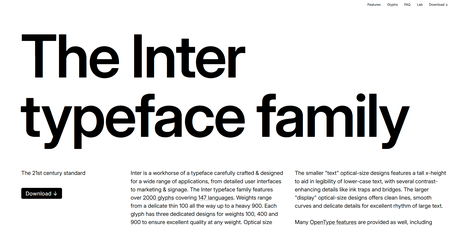
Inter | Open Source (Google Fonts) | UI-optimized, available everywhere, variable weight axis lets you fine-tune presence without changing families. |
GT America | Grilli Type | Has personality without demanding attention. The expanded weight range means you can use the same family for both display and body. |
Bricolage Grotesque | Open Source | The "perfectly imperfect" free option. Slightly irregular curves and off-grid spacing that read as human-made, not algorithmic. Pairs beautifully with botanical subject matter for obvious reasons. |
The anchoring rules:
- Set body copy in one of these workhorses at Regular or Medium weight. Never Light — Hyper-Bloom backgrounds already reduce contrast; thin strokes disappear.
- Tracking at +10 to +20 for headlines in anchoring type. The extra breathing room prevents letters from merging with background detail.
- Color for anchoring type: never pure black. #2D2D2D for warm palettes, #1A1A1C for cool ones. The slight warmth or coolness in the near-black creates harmony with the palette without calling attention to itself.
- One display face max per composition. If the headline is in Heritangle, everything else is in Söhne or Inter. If the palette is Atrevido, the type is an anchor all the way through.
⚠️ Warning: Avoid ultra-thin weights (100-200) on any type over a Hyper-Bloom background. The blur gradients and high-detail floral textures create inconsistent contrast behind the letters, and thin strokes will disappear unpredictably across the composition. This is the single most common failure mode I see in Hyper-Bloom type work.
Five Pairings I Actually Use
These are the combinations I come back to. Steal them.
1. Atrevido Crimson + Söhne Bold/Regular
Palette: #DC143C (hero), #FBF7F0 (bg), #2D2D2D (type), #FFD700 (accent, ≤10%)
Type: Söhne Bold for headlines (uppercase, +20 tracking), Söhne Regular for body (16px+, -5 tracking)
Best for: Beauty branding, fragrance packaging, editorial headlines where the image carries 70% of the impact and type just needs to land cleanly.
2. Industrial Iris + GFS Didot Display/GT America Regular
Palette: #4B0082 (hero), #B0A8A0 (bg), #8B3A3A (accent), #1A1A1C (type)
Type: GFS Didot for hero headlines (sentence case, tight tracking), GT America Regular for body
Best for: Luxury fashion editorial, dark floral brand identities, anything that needs to feel expensive and slightly severe.
3. Nueva Tropical + Bricolage Grotesque Bold/Regular
Palette: #FF6B35 (hero tangerine), #8B2FC9 (purple orchid), #00A651 (bold green accent), #F5F0E5 (bg), #2E2E2E (type)
Type: Bricolage Grotesque Bold for headlines (its organic irregularities echo the tropical theme), Bricolage Grotesque Regular for body
Best for: Hospitality branding, resort marketing, event design, any context where the florals are tropical rather than romantic. The imperfect curves in Bricolage mirror the unpredictability of actual tropical foliage.
4. Holographic Bloom Pastels + Inter Variable
Palette: #D5C6E0 (digital lilac), #F0C4C4 (blush orchid), #F5C4A0 (frosted coral), #3A3A4A (soft near-black type)
Type: Inter Variable — weight 600 for headlines, weight 400 for body. The variable axis lets you dial presence up or down without switching families.
Best for: Wellness apps, soft beauty campaigns, digital-first brands where the palette needs to feel futuristic but warm. Inter's neutrality disappears behind the gradient pastels, which is exactly what you want.
5. Moody Luxe + Heritangle/Söhne
Palette: #1A0A1E (plum black ground), #C49A8A (dried rose accent), #E8DDD0 (parchment), #B8952A (tarnished gold — used sparingly)
Type: Heritangle for the single hero word or phrase (the ornamental serif with built-in floral details), Söhne Light (the exception to the no-light-weights rule — it works here because the ground is dark and solid, not a detailed floral texture) for everything else.
Best for: Premium packaging, book covers, hotel branding. The dark ground makes Heritangle's floral serif details feel discovered rather than declared. Maximum three colors per composition — the Velvyne rule applies here too.
The pairings aren't the point. The framework is: know whether your type is competing or anchoring. Know whether your palette is Atrevido-loud or brutalist-quiet. Make the choice consciously, and then commit to it across every element in the composition. Hyper-Bloom rewards conviction and punishes hedging. It always has.
Tags
Linh Nguyen
Graphic Designer
Passionate Graphic Designer | Specializing in Illustration Design | Bringing Captivating Visuals to Life