Motion Graphic Design Trends 2026: Operator to Architect
If your daily routine as a designer still consists of manually easing keyframes in Adobe After Effects to render a static banner, you are building a career on shifting sand. Generative AI models and instant-template engines have completely commoditized the mechanical execution of basic animation. The era of the simple software operator is officially over.
As we navigate the landscape of motion graphic design trends 2026, the traditional freelance starting floor is rapidly dissolving. Entry-level tasks like layout prep, rotoscoping, and template customization are now handled instantly by tools like Canva or integrated AI workflows. To survive and command premium rates in 2026, motion designers must stop selling linear video files and start building interactive, state-driven vector animation systems while embracing handcrafted, textured authenticity that AI cannot replicate.
🚀 TL;DR: In 2026, the motion design industry has split. Standard rendering has become a cheap commodity automated by AI, while premium rates are commanded by design architects who master interactive state machines (Rive), programmatic procedural systems (Cavalry), and handcrafted, highly textured imperfections.
The Death of the "Operator": Why Basic Rendering is Commodity in 2026
The traditional pipeline of motion design has hit a structural wall. In past years, a designer could build a sustainable business by taking static vector assets, dropping them into After Effects, and keyframing basic transitions. Today, that entire middle tier of production is fully automated. Client-side tools and browser-based editors can animate layouts, adjust timing curves, and output clean MP4s in a single click.
This automation has effectively killed the role of the "Operator"—the designer whose value is defined purely by software proficiency and execution speed. If a machine can rotoscope a character in three seconds or generate a seamless walk cycle from a single prompt, manual execution ceases to be a premium service.
To survive this shift, premium motion designers must step into the role of the "Architect." An architect does not just move pixels from point A to point B; they design the system, define the visual behavior of a brand across platforms, and integrate motion directly into the user experience. They focus on how motion solves business problems, improves interface clarity, and creates deep emotional connections.
To rise above this sea of automated templates, designers must shift their focus from static, linear files to dynamic assets that respond directly to user behavior.
The Rise of "Interactive Motion": State Machines Over Video Files (After Effects vs. Rive)
For a long time, the web was a graveyard of pre-rendered, linear video formats. If you wanted an animation on a web page, you had to export a heavy MP4, an inefficient GIF, or compile a complex Lottie JSON. These files are static, non-interactive, and heavy on performance.
The core of interactive motion design in 2026 is the transition from linear timelines to stateful runtimes. The comparison of Rive vs After Effects highlights this divide. While After Effects remains a powerhouse for post-production video, it is fundamentally designed for linear rendering. It cannot react to user input in real-time.
In contrast, platforms like the official Rive website allow designers to build interactive state machines. A state machine contains different visual states—such as an idle loop, a hover reaction, a loading spin, and a success celebration. The designer builds the visual logic and transitions directly in the design tool, and the system exports a lightweight, code-ready runtime file.
Think of it this way: traditional linear animation is like a pre-recorded movie tape—no matter what the user does, it plays from start to finish. Interactive motion via Rive is like a digital puppet; it sits in the interface, tracks the user's cursor, and reacts to clicks, hover speed, or loading states in real-time.
The developer doesn't need to reconstruct the timeline in code. They simply initialize the runtime and trigger the inputs defined in the state machine:
// Initialize a Rive state machine on a canvas element
const r = new rive.Rive({
    src: 'brand_hero.riv',
    canvas: document.getElementById('motion-canvas'),
    autoplay: true,
    stateMachines: 'LoginState',
    onLoad: () => {
        // Prevent layout skewing by matching drawing surface to container size
        r.resizeDrawingSurfaceToCanvas();
    }
});
A complex vector illustration animated this way can be under 30KB, rendering at a smooth 120 FPS on almost any device.
While interactive runtime files dominate modern product interfaces, a parallel trend is reshaping the aesthetic landscape of video content: the return of the tactile human touch.
The Human Stance: Embracing Handcrafted Imperfection to Fight AI Blandness
As AI-generated video models flood the web with hyper-polished, ultra-smooth, and mathematically perfect simulations, a visual fatigue has set in. When every digital asset looks perfectly glossy, perfection loses its value. In response, premium brands are turning back to the physical world, prioritizing handcrafted imperfection.
This is a massive aesthetic opportunity for designers who specialize in illustration design and tactile visuals. The trends highlight a surge in stop-motion CGI, rough paper textures, visible film grain, liquid glass distortion, and frame-by-frame sketches.
Instead of animating at a super-smooth 60 frames per second, designers are intentionally animating "on twos" or "on threes" (12 or 8 unique frames per second). This lower frame rate replicates the organic cadence of classic stop-motion animation. Incorporating physical imperfections—like hand-drawn charcoal lines, slight timing variations, and textured paper overlays—creates a sensory experience that prompts and algorithms cannot replicate.
By focusing on visual friction and organic irregularities, designers inject personality and warmth into their work, creating distinct, memorable experiences.
Mastering this aesthetic friction is powerful, but translating these visuals into scalable, repeatable assets requires a strategic methodology that treats motion as a system.
From Keyframes to Systems: How to Master Motion Graphic Design Trends 2026
For anyone looking to lead the pack in motion graphic design trends 2026, the shift is clear: you must stop selling single animations and start selling scalable design systems.
A motion design system defines the physical behavior of a brand. It standardizes transition speeds, easing curves, spatial layouts, and responsive behaviors. Instead of designing a one-off animated card, you design a reusable framework. Developers use these tokens to ensure that every UI transition—from a minor button click to a major page transition—feels like it belongs to the same visual family.
Furthermore, a modern motion design AI workflow should treat artificial intelligence as a production assistant rather than a competitor. Designers use AI to automate the tedious tasks:
* Extracting clean alpha channels from raw footage.
* Generating infinite storyboard variations for client review.
* Automating clean vector conversion for hand-drawn sketches.
By delegating the mechanical tasks to the machine, the designer is freed to focus on the overall creative direction, system architecture, and storytelling.
Moving from a system-based mindset to daily production requires an updated toolkit designed for procedural and real-time execution.
The 2026 Tech Stack: Core Tools to Command Premium Rates
To charge premium agency rates in 2026, your toolkit must evolve past the traditional Adobe-centric environment. The modern workflow combines procedural generation, real-time interactive rendering, and tactile 3D:
Tool | Core Strength | Target Output | Key Benefit |
|---|---|---|---|
Rive | Stateful, interactive vector runtime animation |
| Real-time rendering, ultra-low file size, and interactive state logic. |
Cavalry | Procedural node-based 2D generation | SVG, Lottie, WebM | Data-driven variations and complex math-based physics. |
Blender | Open-source real-time 3D and rendering | OBJ, Alembic, MP4 | Tactile CGI, claymation physics, and custom 3D illustration. |
After Effects | Compositing, VFX, and hero video assets | Prores, WebM | High-end visual effects and complex pixel-based post-production. |
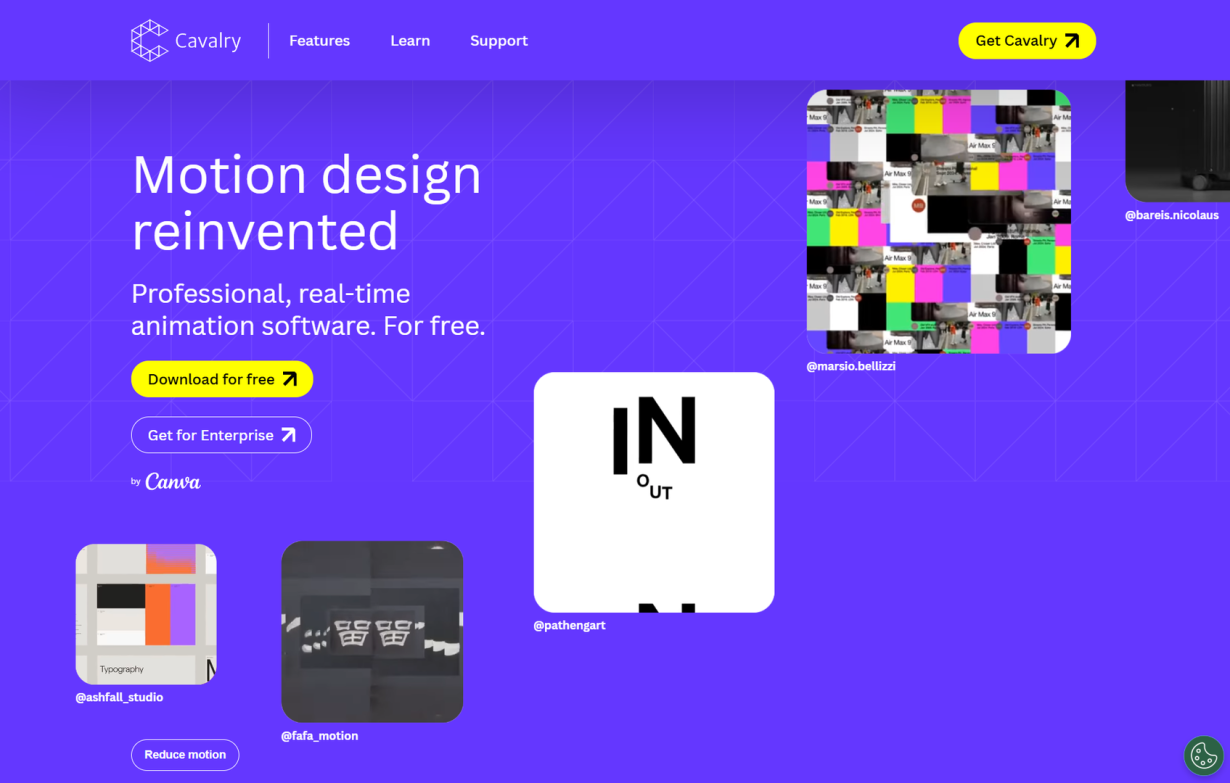
Using a node-based, procedural design environment like Cavalry allows you to construct complex patterns and connect them to real-time data sources (like Google Sheets or local APIs) without manual keyframing. Combining procedural systems like Cavalry, motion canvas tools, and interactive runtimes makes you an indispensable engineering partner.
Meanwhile, using Blender for real-time 3D allows designers to quickly model tactile clay, metallic liquids, and custom illustrations, bridging the gap between traditional 2D layout and three-dimensional depth. Reshaping your technical capabilities in this way sets the stage for a much larger transformation in your creative identity.
Evolving Your Practice
The transition from operator to architect is ultimately a mental shift. In 2026, the machine can generate the frames, but only the designer can construct the soul.
By centering your career on stateful interactivity, physical authenticity, and systemized thinking, you ensure that your work remains irreplaceable. The designers who command premium rates are those who build interactive systems, author tactile stories, and lead the motion graphic design trends 2026 wave as architects of human experience.
Tags
Linh Nguyen
Graphic Designer
Passionate Graphic Designer | Specializing in Illustration Design | Bringing Captivating Visuals to Life