Eco Conscious Palette Mistakes: A Designer Guide for 2026
You've seen them. Every brand in 2026 has at least one campaign built on a palette that looks like it was pulled from a forest floor — moss green, warm brown, cream, maybe a soft terracotta if they're feeling bold. It reads as eco-friendly. It signals sustainability. And in most cases, it has nothing to do with whether the design actually reduces environmental impact.
This is the eco-conscious palette problem. Not in the colors themselves — earth tones are fine, natural, beautiful. The problem is that designers are picking them as a trend signal, not as a sustainability decision. And that gap between looking green and being green is where the real mistakes live.
If you're working with eco-conscious palettes in 2026 — or your clients are asking you to build one — here's what actually goes wrong, and what to do instead.
The Eco-Conscious Palette Mistake Nobody Talks About
Most articles about eco-conscious color palettes do the same thing: show you a beautiful palette of forest greens and warm sand tones, tell you it's sustainable, and call it done. That's not a mistake — it's a sales pitch.
The actual mistake is deeper: designers treat the palette as the sustainability statement, when the palette is only the surface. A green-brown-cream combination says nothing about whether the design was printed on FSC-certified paper, whether it used low-VOC inks, whether it was tested for durability so a product doesn't get replaced in two years, or whether it actually meets accessibility standards.
The palette is the visible layer. The sustainability is in the decisions behind it.
That distinction sounds small. It isn't. It changes how you evaluate a palette, what questions you ask before committing to one, and how you talk to clients about what they're actually asking for when they say "make it eco-friendly."
Mistake #1: Greenwashing by Color Alone
This is the most common failure mode, and the most visible.
A client says they want an eco-conscious brand palette. You deliver greens, browns, warm neutrals. Everyone's happy. The palette ships on packaging, digital ads, social media. A year later, the brand is called out on social media for using non-recyclable packaging and sourcing from factories with poor labor practices. The green palette didn't save them. In fact, it made the credibility gap worse — because they'd marketed themselves as sustainable through color, and the color had no substance behind it.
💡 The rule: A palette that looks eco but isn't connected to the brand's actual practices isn't a design choice — it's a liability.
Greenwashing by color alone happens when designers treat the palette as the sustainability statement rather than the starting point. The real work happens after the colors are picked: verifying what the palette can actually claim, and making sure the claim matches the reality.
In 2026, audiences are more informed than they were five years ago. The EU Green Claims Directive has tightened regulations around how brands can represent their environmental credentials. A palette that signals sustainability without a product or process to back it up isn't just a design mistake — it's a brand risk.
What to do instead: Before locking in an eco palette, ask what it's connected to. Is there a certification, a supply chain commitment, a material specification? If not, the palette needs to be positioned as "inspired by nature" rather than "eco-certified" — and that distinction matters to your client.
Mistake #2: Accessibility Takes a Back Seat
Muted earth tones look sophisticated. They also fail contrast ratios more often than any other palette type.
WCAG guidelines require a minimum contrast ratio of 4.5:1 for normal text and 3:1 for large text. When you pull from natural color ranges — sage greens, warm taupes, soft creams — you're working in a narrow band where adjacent values are often closer in lightness than they appear to be. A "moss green" text on a "warm cream" background can read as naturally harmonious in a color picker and fail accessibility testing in seconds.
The most common accessibility failures in eco-conscious palettes:
Sage green on warm white — desaturated tones often sit at similar lightness values, making text hard to read
Brown on tan — low-contrast earth combinations that feel organic but fail WCAG
Olive on cream — popular in eco branding, frequently fails contrast for body text
The green-brown combination — the eco palette's most iconic pairing — is also one of the worst for deuteranopia (red-green color blindness), which affects approximately 8% of men.
The fix isn't to abandon muted palettes. It's to check contrast before you commit, not after. Tools like the WebAIM Contrast Checker take seconds to use and catch problems before they ship. Stark for Figma and Color Oracle are built into the workflow for designers who want to catch accessibility issues in the design phase.

💡 Tip: Build accessibility checking into your palette review process — not as an afterthought, but as a checkpoint before you present any eco palette to a client.
The irony is that a palette that fails accessibility standards is doubly bad: it excludes real users, and it undermines the brand's sustainability narrative. "We care about the environment" means nothing if your packaging can't be read by someone with low vision.
Mistake #3: Designing for Screen, Ignoring Print
This mistake is invisible until it costs money.
A palette looks stunning on a 27-inch calibrated monitor. The first print run comes back with color shifts: the sage green reads blue in CMYK, the warm brown muddy, the cream too warm. The printer requests a correction. You revise the files. The corrected print still doesn't match the screen. Another revision. Meanwhile, time and material cost accumulate.
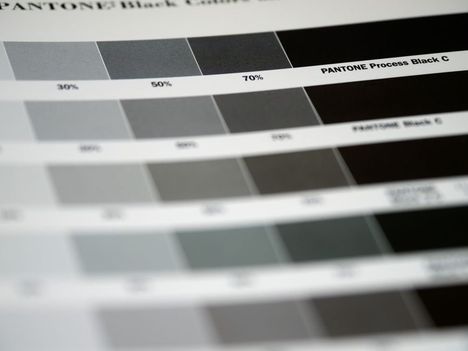
This happens because RGB-to-CMYK color space conversion behaves differently across hue ranges. Muted, desaturated earth tones — exactly the colors that define most eco palettes — are notoriously unstable in print because they sit in the gray zone between primary and secondary color separation. What looks like a clean sage in RGB can break into muddy cyan or warm yellow in CMYK depending on the ink set and paper stock.
The specific print failures to check before committing to an eco palette:
Ink coverage: Dark greens and rich browns often require high ink density, which increases cost and drying time; low-CO2 inks often can't achieve the same saturation
Substrate interaction: Uncoated paper absorbs pigment differently than coated stock — a palette that looks perfect on coated card can look dull and flat on recycled uncoated
Color consistency across runs: Eco-printing processes using vegetable-based inks can shift between print batches; your palette needs to tolerate variation without looking broken
🚀 Pro tip: Ask your print partner for a CMYK-proof before finalizing any eco palette. Most printers will pull a single proof sheet for a small charge. That's cheaper than a 10,000-unit misprint.
What to do instead: Build a print check into your palette process. Export your palette in CMYK and look at it. If a color value drops below 60% ink coverage on a two-color combination and the result looks muddy, adjust before it becomes a production problem.
Mistake #4: Ignoring the Material Lifecycle
Here's the mistake that most designers never think about: a color that fades is a product that gets replaced.
The lifecycle question for any eco-conscious palette is direct: will this color look the same in six months, a year, five years? If it degrades — if a printed material yellows, or a digital palette's saturation drifts on older monitors — the product reaches end-of-life faster. That's the opposite of sustainability. You've chosen the palette for longevity and shortened the product's life instead.
The specific lifecycle factors that affect eco palettes:
UV stability: Pigments exposed to sunlight degrade at different rates. Earth-tone greens (particularly those with yellow undertones) fade faster than neutrals with gray or blue undertones. If the material will be displayed outdoors or in bright interiors, this matters.
Ink oxidation: Some low-VOC and vegetable-based inks oxidize more rapidly than conventional petroleum inks, causing colors to shift as they cure. This is a print process issue, but it affects the palette's final appearance.
Paper aging: Uncoated, recycled stocks yellow faster than coated alternatives. If you're designing for longevity, the substrate matters as much as the ink color.
The greenwashing problem here is subtle but real: a palette chosen to signal sustainability can actually increase material waste if the colors age poorly and trigger premature product replacement.
Lifecycle design guidelines from sustainable design organizations address lifecycle thinking as a core principle — not just choosing eco-adjacent colors, but understanding how those colors perform across the material's intended lifespan.
What to do instead: Ask "what does this look like in two years?" before you finalize any eco palette for a physical product. If the color family has known aging issues, either shift to more stable pigments or position the design to accommodate a refresh without invalidating the brand identity.
Mistake #5: A Palette Too Narrow to Last
Eco-conscious palettes tend toward minimalism by nature. Green, brown, cream — done. It's clean, it's consistent, and it breaks within eighteen months.
The problem is that a palette this narrow leaves no room for the brand to evolve. When the marketing team needs to run a campaign outside the core palette — a high-contrast sales deck, a limited-edition packaging run, a digital product that requires screen-safe color coding — the options are either break the palette rules or force-fit the brand into the wrong colors. Both are bad.
Limited palettes also create another sustainability problem: when a palette can't serve the brand long-term, the brand redesigns. A redesign means new printed materials, new production runs, new inventory. That waste compounds over time.
The "eco palette" and "versatile palette" aren't opposites — but most designers treat them as if they are.
What to do instead: Build a primary-secondary-tertiary structure into your eco palette from the start. The primary is the core earth-tone range (2–3 colors). The secondary adds enough range for digital interfaces and campaign work (2–3 more). The tertiary is a small set of accent colors for moments when the brand needs to cut through — usually more saturated or more contrasting than the primary range.
This structure keeps the palette coherent (everything looks like it belongs together) while giving the brand enough range to function across formats and time without a redesign.
How to Build an Eco-Conscious Palette That Doesn't Make These Mistakes
The process that avoids these mistakes is straightforward. It just requires asking different questions at each stage.
Start with the claim, not the color. Before picking any color, establish what the brand can actually say about its sustainability practices. No certification, no eco palette claim beyond "nature-inspired."
Check contrast on every combination. Plug every foreground-background pairing into a contrast checker before finalizing. This takes minutes and prevents the most common accessibility failure.
Get a CMYK proof before production. A small print proof costs less than a reprint. Verify the palette in print before you commit to it on packaging or physical materials.
Ask about the material lifecycle. What substrate will this be printed on? What printing process? How does the color behave over time? If you don't know, find out — the answer might change which hues you choose.
Build range into the palette. Primary, secondary, tertiary. This isn't about adding colors for the sake of it — it's about giving the brand room to function without a redesign.
Verify, then publish. If the palette is being used to market environmental credentials, make sure those credentials are real. A designer who builds a credible eco palette has done something valuable. A designer who builds one without verifying the claim has created a liability.
The eco-conscious palette conversation isn't really about color. It's about the difference between doing something that looks right and doing something that is right. In 2026, audiences and regulators are getting better at telling the difference — and the designers who know the difference are the ones who get called back.
Tags
Linh Nguyen
Graphic Designer
Passionate Graphic Designer | Specializing in Illustration Design | Bringing Captivating Visuals to Life