Retro Futurism Graphic Design: Why It’s Surging in 2026
Open a design portfolio platform right now and count how many brands look identical — the same sans-serif type, the same pastel palette, the same rounded corners, the same gradient blob. These are good designs. They are also, increasingly, indistinguishable.
That uniformity is the result of shared tools, shared trends, and shared AI models trained on the same visual language. And it's exactly why retro futurism is having a moment.
But here's what the trend coverage keeps getting wrong: this isn't nostalgia. The 2010s synthwave revival was nostalgia. The 2023-2024 vaporwave moment was nostalgia. Retro futurism in 2026 is something different. It's a reaction — to AI-generated visual frictionlessness, to doom-scroll exhaustion, to the creeping feeling that every design decision could have been made by a machine that hadn't bothered yet.
In 2026, that specificity — the sense that a design knows where it came from — is genuinely rare. That's the point. And that's why major trend authorities from WGSN to Pentagram are watching it closely.
Why Retro Futurism Is Having Its Biggest Moment Right Now
The obvious explanation is nostalgia. But nostalgia doesn't explain why the style is appearing in tech launches, automotive branding, music visual identities, and editorial design simultaneously. Something else is happening.
AI-generated design has crossed a quality threshold. It can produce technically competent, visually polished work at a scale that no human designer can match. That's useful. It's also creating a new problem: when every brand has access to the same quality, quality stops being a differentiator.
Retro futurism is a response to that problem. It requires something AI currently struggles with: specificity of reference. You can't prompt your way into a retro futurism that feels authentic without understanding what you're referencing — the specific era, the specific visual language, the specific cultural mood you're drawing from. The designers doing this well in 2026 aren't running Midjourney with a "retro futuristic" prompt. They're studying Syd Mead, the pulp sci-fi magazine covers of the 1950s, the Googie architecture of Southern California, the optimistic geometry of Art Deco. They're bringing that knowledge to bear on contemporary design problems.
The second driver is cultural: mid-century optimism about the future is compelling when the actual future feels uncertain. Retro futurism imagines a world where technology was elegant, progress was inevitable, and the future was something you'd look forward to. That emotional register is a genuine counter to the ambient anxiety that defines much of contemporary tech design. Pentagram's 2026 whitepaper on brand identity noted this explicitly — the "optimism-forward" identities referencing 1950s-70s space age are finding purchase precisely because they're offering a visual counter-argument to the dominant anxiety aesthetic of recent years.
The Anatomy of 2026 Retro Futurism
Retro futurism isn't a single aesthetic. It's a collection of visual languages that share a common reference point. Here's what each element communicates in its current incarnation:
Chrome and metallic finishes signal the mid-century confidence that technology could be beautiful. In contemporary applications, chrome works best as an accent rather than a dominant element — a chrome border, a metallic type treatment, a highlight on a product render. Full-chrome designs tend to read as costume rather than craft.
The 2026 color palette has matured beyond aggressive synthwave neon. Muted chrome, burnt orange, antique teal, and dusty gold are replacing the hot pink and electric blue of earlier synthwave iterations. The palette has grown up — and it's more versatile for brand applications as a result.
Atomic motifs — orbiting electron shapes, starbursts, boomerang forms — reference the Atomic Age directly. These work as graphic elements in layouts, as decorative iconography in branding, and as structural geometry in compositions. They work best when used structurally rather than decoratively.
Art Deco geometry — the parallel lines, stepped forms, and radiating sunburst patterns — provides the architectural backbone. These elements have strong compositional weight and work as frameworks for layouts as much as decorative detail.
Vintage space-age typography is one of the highest-impact elements. A well-chosen vintage typeface does more work than any other element. Cooper Black and its contemporaries defined an era; using them with the same confidence as those original designers is the difference between authentic reference and parody. Pair with clean contemporary typography to create the tension between past and future that defines the style.
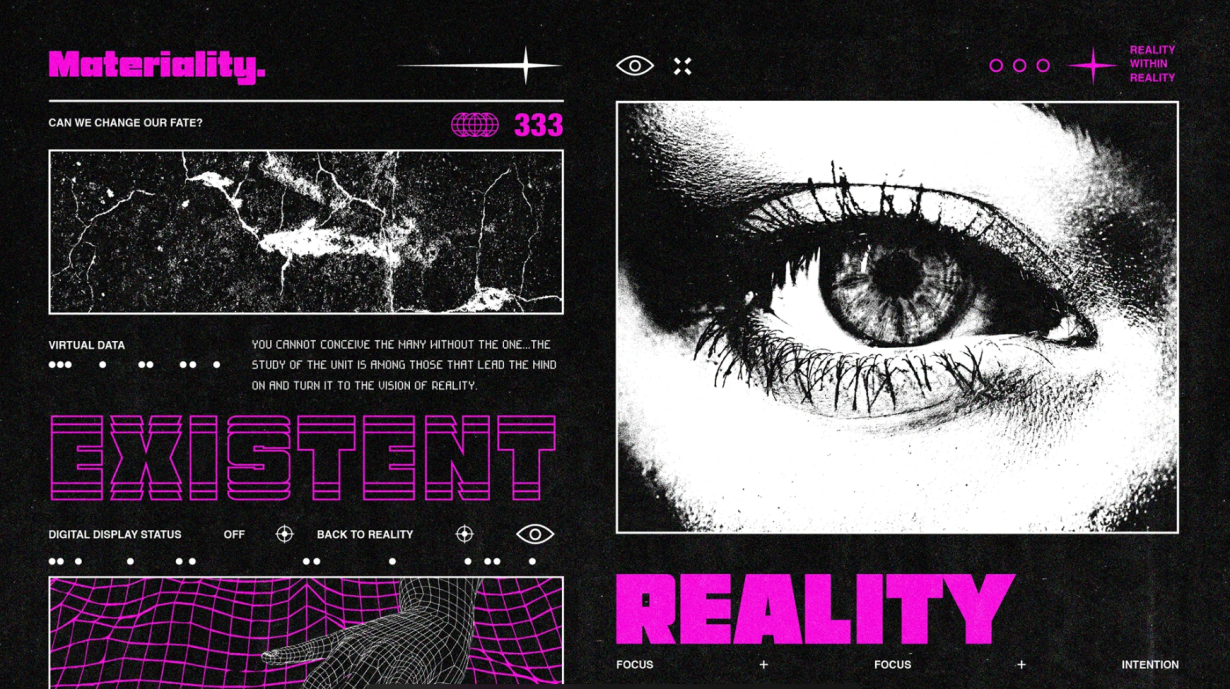
CRT scanlines, halftone textures, and analog grain are the tactile signature of 2026 retro futurism — the elements that signal this isn't a digital recreation but a deliberate reinterpretation. Risograph printing, pen-and-ink illustration, and vintage texture overlays add an authenticity that AI-generated retro futurism can't replicate. The hand-crafted element is the differentiator — use it deliberately.
Where It's Showing Up: Brand Identity, Album Art, Packaging, UI
Retro futurism has graduated from niche aesthetic to mainstream design language. The shift is visible across every design-adjacent category:
Brand identity: EV manufacturers, creative studios, music labels, and gaming companies have been the earliest adopters — brands whose audiences are already culturally literate in the reference points. The Blade Runner aesthetic of a synthwave artist's album cover isn't a costume; it's a natural expression of the cultural territory the work already occupies.
Packaging: Premium beverage brands and consumer goods are using retro futurism to signal heritage and optimism simultaneously — a combination that's difficult to achieve through other visual languages. The Beazley Design Index 2025 noted this as a key cultural undercurrent shaping graphic and product design.
UI and digital interfaces: The style is appearing in app iconography, dashboard design, and web interfaces where the goal is to signal warmth and intentionality over pure utility. This is a significant signal — it means retro futurism is being adopted as a usability choice, not just an aesthetic one.
The common thread: retro futurism works when the brand has a genuine connection to the cultural mood it references. A financial services company adopting a synthwave palette because it's "modern" will read as confused rather than forward-thinking. A consumer goods brand using Googie architecture motifs for no reason is borrowing from a cultural conversation they haven't earned a place in.
💡 The rule: Retro futurism earns its place in a brand identity when the style's emotional register — optimistic, confident, forward-looking — is a genuine expression of what the brand stands for. If you're using it because it looks cool, that's a design decision waiting to be questioned.
The AI Problem: Can Retro Futurism Survive the Machine?
This is the question the design community keeps returning to, and it's worth addressing directly.
Once Midjourney can generate a convincing retro futurism composition in thirty seconds, does the style lose its meaning?
The answer is: probably yes, for the surface-level version of it. A generic retro futurism aesthetic — chrome, starburst, neon — is now accessible to anyone with a text prompt. That accessibility is a feature for designers who want to explore the style quickly. It's also a threat to the style's distinctiveness, exactly as it was threatened by the synthwave wave of 2015-2019.
But here's what AI can't generate: the specific knowledge that makes retro futurism good. The understanding of which era you're drawing from, why that era's visual language worked, what cultural assumptions it encoded, and how to deploy those elements in service of a contemporary design problem rather than a historical pastiche.
The designers who are doing this well in 2026 aren't just running prompts. They're studying Syd Mead's concept art, the graphic design of Peter Saville and Factory Records, the pulp sci-fi magazine covers of the 1950s. They're building reference libraries that inform their work at a structural level. That's a different kind of practice — slower, more deliberate — and it's exactly what makes the output worth looking at.
A Designer's Practical Guide to Working in the Style
If you're going to do this, do it well. Here's the framework:
Start with the reference, not the result. Before you open a design tool, spend time with the primary sources: Syd Mead's concept art, the pulp sci-fi magazine covers of the 1950s, Googie architecture photography, the visual language of Atomic Age commercial design. The goal isn't to copy these references — it's to internalize the visual intelligence that produced them. Follow r/RetroFuturism and Designboom for ongoing curation of the genre's best contemporary work.
Build your reference library in 3D. Blender and Cinema 4D are producing the most compelling retro futurism work in 2026. The ability to simulate chrome finishes, matte plastic, and brushed aluminum with contemporary rendering fidelity gives the style a technical sophistication that flat illustration can't match.
For illustration and flat work, use analog techniques to ground digital execution. Risograph printing, pen-and-ink illustration, and vintage texture overlays add tactile authenticity. Pair them with clean contemporary typography to create the tension between past and future that defines the style.
Know your sub-style and commit to it. Retro futurism, synthwave, Atompunk, and Raygun Gothic are related but distinct. Know which one you're working in and why. Mixing synthwave neon with 1950s Googie motifs without a coherent reason signals that the designer doesn't know what they're doing — it's the visual equivalent of mixing fonts without understanding why they clash.
Typography is your fastest path to credibility. A well-chosen vintage space-age typeface does more work than any other element. Use it as your anchor and build the rest of the composition around it.
Use modern tools, not period tools. Figma and Procreate for layout and illustration work, Blender or Cinema 4D for 3D, and let the style emerge from your reference knowledge rather than from mimicking the limitations of the era you're referencing.
The Future the Past Imagined, Built Better
Retro futurism in 2026 is ultimately a conversation about what design is for.
When tools make competent design cheap and fast, the value shifts to design that has a point of view. Specificity of reference, historical awareness, cultural literacy — these aren't nostalgic concerns. They're the skills that make the difference between a design that could have been made by anything and a design that could only have been made by a person who cared enough to study where these ideas came from.
The future the past imagined was optimistic, confident, and designed with intention. That's not a bad template for the work worth doing now.
Tags
Linh Nguyen
Graphic Designer
Passionate Graphic Designer | Specializing in Illustration Design | Bringing Captivating Visuals to Life